
5 most popular snake breeds for beginners
Find out which pet snakes are best for beginners and first time buyers, including care, feed and husbandry.
Read morePublished: 15 April 2026
If you’ve recently welcomed a snake into your home and spent the last three days staring at an unmoving coil in the corner wondering if something is wrong – you’re not alone. It’s one of the most common concerns new snake owners have, and in most cases, it’s also completely unfounded.
Snakes are not fish. They won’t dart around their enclosure to entertain you. But that doesn’t mean nothing is happening. Once you understand how your snake’s species is wired to behave, what looks like inactivity starts to make a lot more sense.
Before anything else, it’s worth understanding that “snake behaviour” isn’t one thing. Different species have very different natural lifestyles – some burrow, some climb, some sit completely still waiting for prey to wander past – and those instincts don’t disappear in captivity. The terrarium just becomes their territory.
If you’re considering a snake for the first time, or trying to make sense of the one you already have, the most useful thing you can do is get to know your specific species. Here’s a guide to the three main behavioural types.
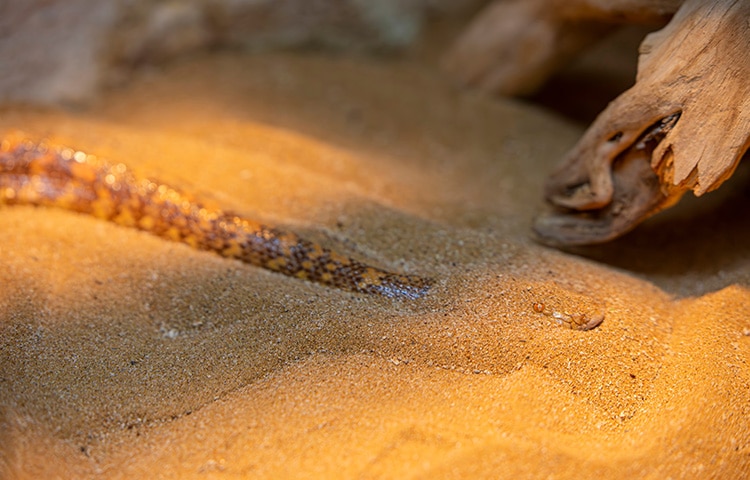
Sand boas and hook-nosed snakes are classic examples of burrowing species. In the wild, they spend most of their lives at or just below the surface of the ground, using the substrate for security and warmth. In a home terrarium, they’ll do exactly the same.
If your burrowing snake regularly disappears into the bedding or vanishes behind a hide for days at a time, this isn’t cause for alarm – it’s exactly what they’d do in nature. They’re not unhappy or hiding from you. They’re just being snakes.
To keep a burrowing species content, you’ll need:
Burrowing snakes tend to suit owners who appreciate a calm, low-maintenance companion and don’t need their pet to be constantly on display. If you want something to watch, a burrower probably isn’t your best match.
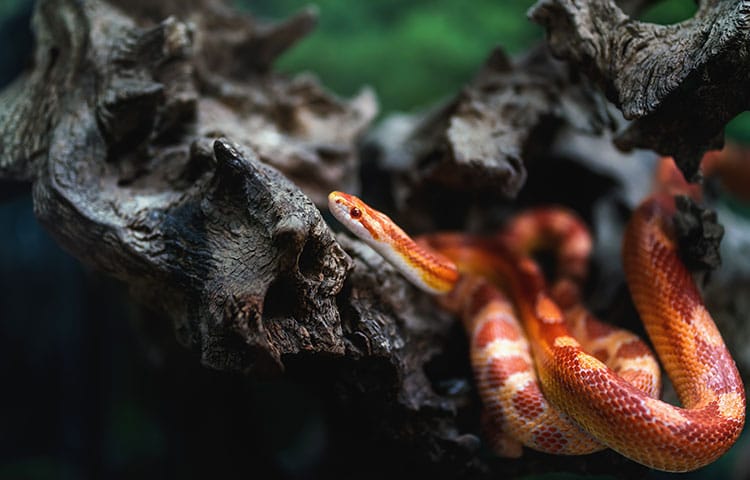
Corn snakes and garter snakes are well-established in the hobby for good reason. They’re curious, they use vertical space, and they’re generally more active than their burrowing counterparts – which makes them a more engaging option for owners who want to actually see their snake doing things.
That said, “more active for a snake” is still pretty sedentary by most standards. Corn snakes and similar species tend to be most active around dusk, will spend plenty of time curled on branches or elevated perches, and will still retreat to hides regularly. Don’t expect constant movement.
For climbing species, the terrarium should be set up vertically – height matters more than floor space. You’ll need stable branches at various levels, secure hides at different heights, and some form of privacy screen so your snake has somewhere to retreat when it wants to feel unseen.
Climbing snakes are a good fit for owners who want a structurally interesting enclosure and enjoy watching their pet explore — just without expecting action every time they look.
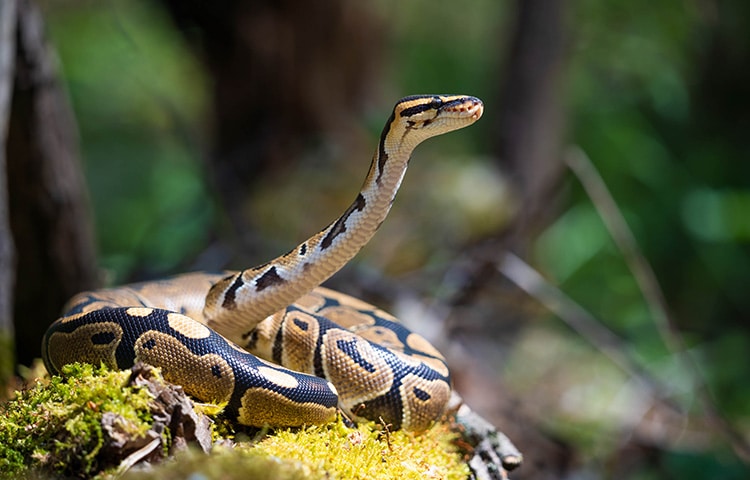
The ball python is the most famous example of this group, and it’s probably responsible for more first-time snake owner panic than any other species. Ball pythons can sit completely motionless for extraordinarily long periods. It’s not illness, it’s not unhappiness – it’s strategy. In the wild, an ambush hunter conserves energy and waits. The prey comes to them.
Ball pythons and smaller boa species are primarily nocturnal, which means the times when they’re most likely to move are also the times when most owners are asleep. During the day, they’ll typically be coiled in a hide, perfectly still, doing absolutely nothing visible.
If you have an ambush hunter, the key things to watch are feeding, shedding, and posture, not movement. A snake that’s eating well, shedding cleanly, and holding a relaxed, natural posture is a healthy snake, regardless of how little it moves. As a general rule: a still snake is usually a relaxed snake.
To keep ambush hunters comfortable, you need tight, narrow hides that let them feel enclosed, minimal disturbance to their setup, and a consistent routine – these species don’t adapt well to constant rearranging.
Stillness on its own is rarely a problem. But there are some signs alongside stillness that are worth a vet check:
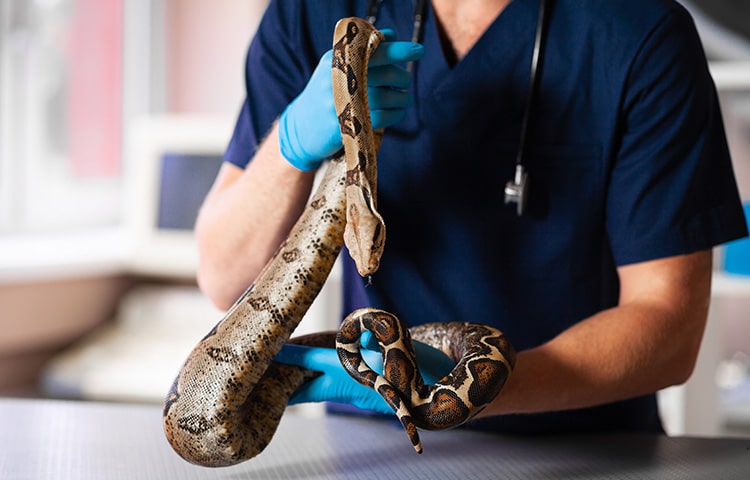
If you’re ever unsure, it’s always worth contacting an exotic specialist vet rather than waiting to see if things resolve on their own.
Every species has different needs, and every owner has different expectations. Before you commit, it’s worth being honest with yourself about which of the above suits you best.
If you want visible activity and interaction – a climbing species might be your best starting point.
If you’re drawn to naturalistic setups and quiet observation – a burrowing species could be deeply rewarding.
If you’re patient, enjoy a predictable routine, and find something meditative about watching a still animal — an ambush hunter like a ball python might be perfect.
What matters is matching the species to your lifestyle, not expecting a snake to behave like a different animal.
Snakes are fascinating, long-lived pets that can spend years with you – and like all pets, the unexpected can happen. Illness, injury, and the cost of specialist exotic vet care are all real considerations for snake owners.
If you’d like to know more about exotic pet insurance for snakes, or get a quote, we’re here to help.
Get a quote today